
Decorative Flake Systems
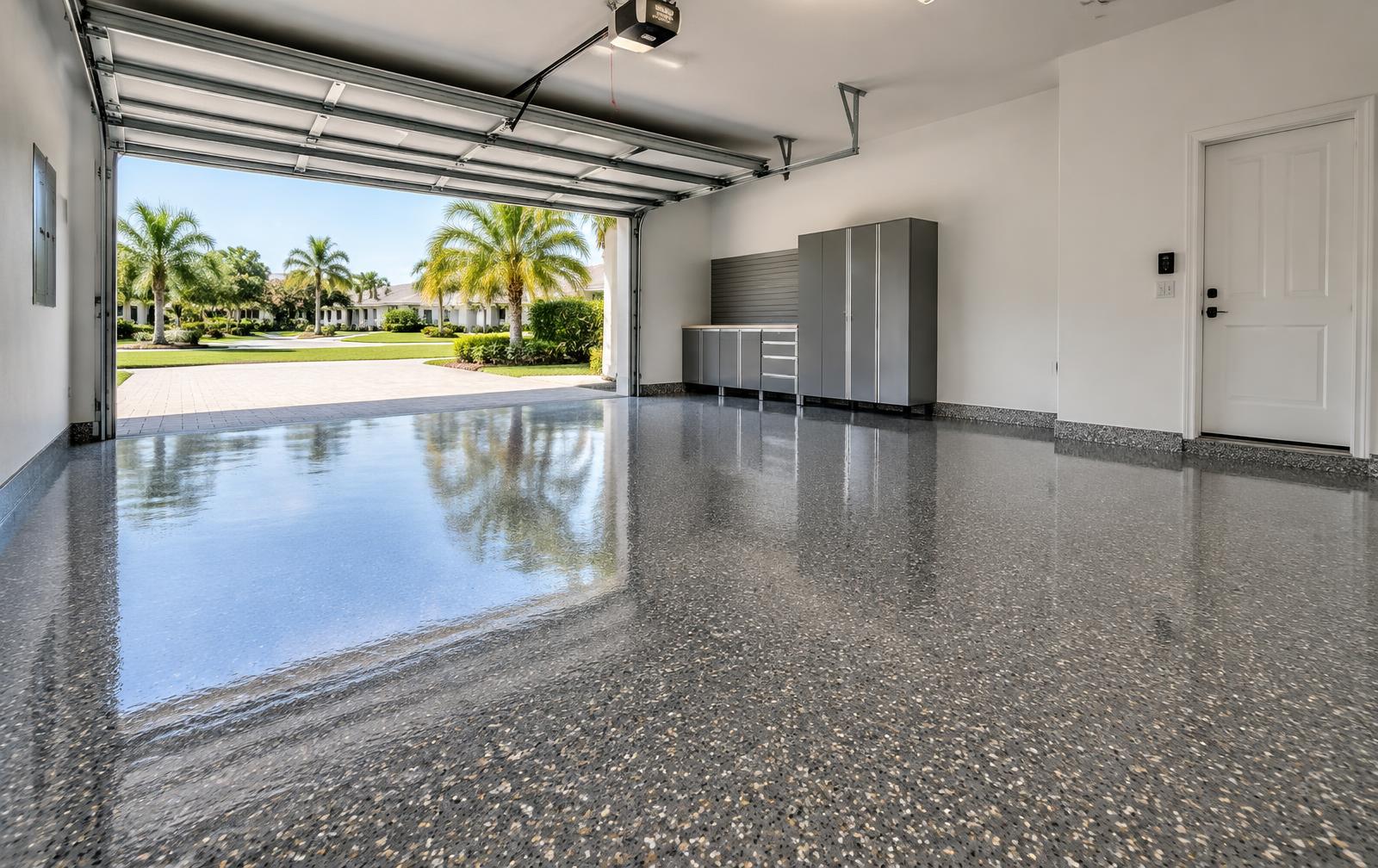
Vinyl chips are broadcast into a base coat and sealed under a clear topcoat. The result is a textured, speckled floor that hides minor imperfections and offers the widest range of color blends.
Polk County, Florida
Transform dull, stained concrete into a clean, durable garage floor built for everyday use and Florida conditions.
Before & After
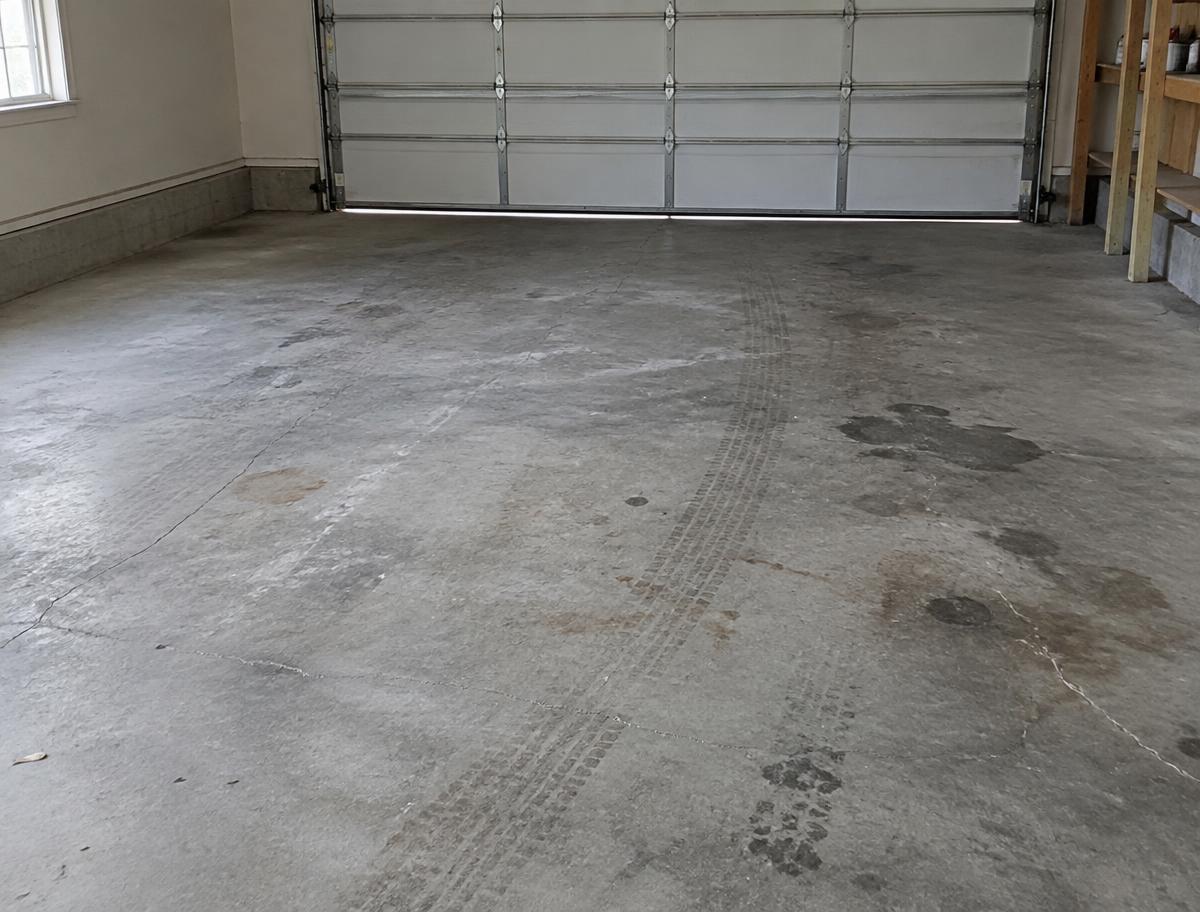
Untreated slabs collect the evidence of ordinary life: oil spots near the engine bay, black tire marks where you pull in, a fine gray dust that settles on everything you store out there. Hairline cracks widen, older concrete darkens unevenly, and no amount of sweeping makes it look clean for long.
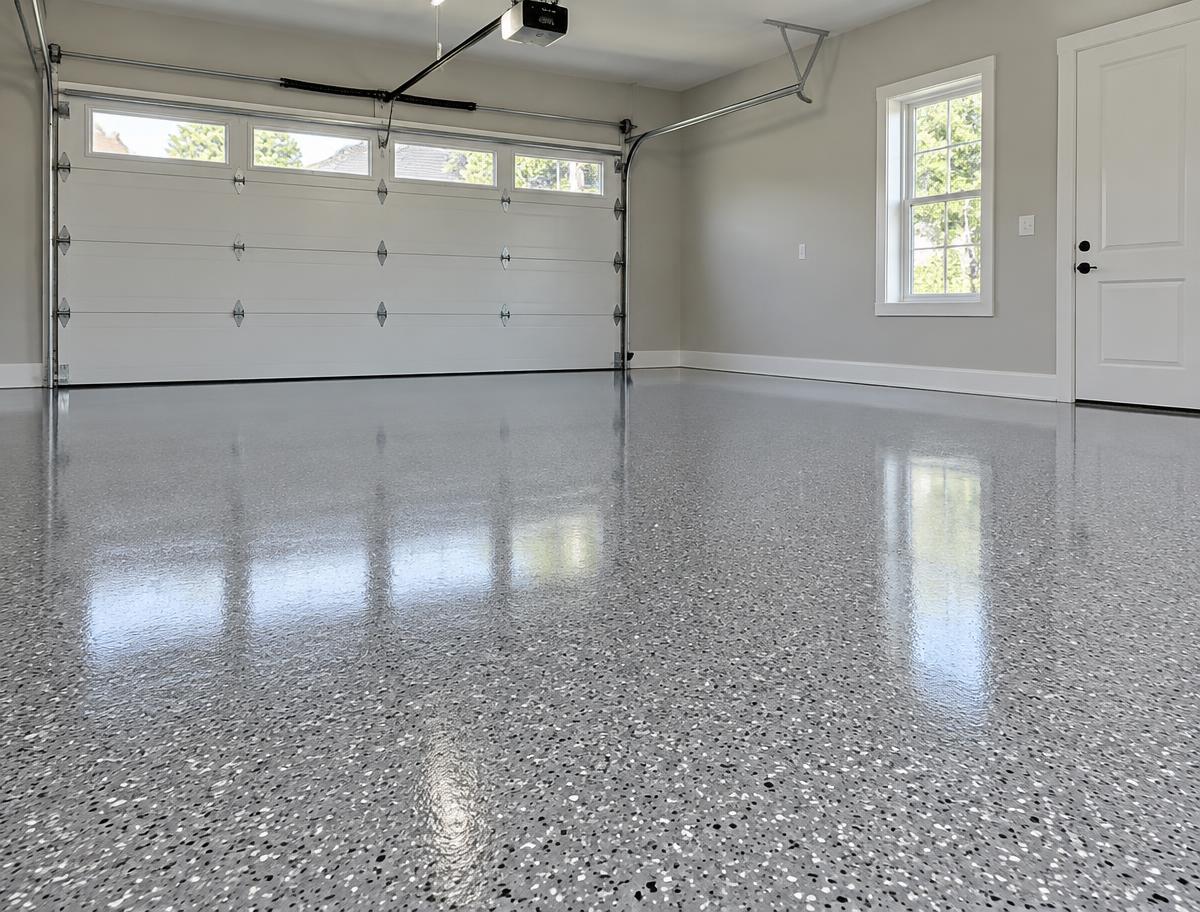
A professionally installed coating changes the surface itself. The concrete is ground to a proper profile, damage is patched, and a bonded coating system goes down as a sealed, light-reflecting floor. The room gets brighter, spills wipe up instead of soaking in, and the space finally looks finished.
Primary Service
Most garages come down to three system choices. The right one depends on your concrete, how the space is used, and the look you want.
Vinyl chips are broadcast into a base coat and sealed under a clear topcoat. The result is a textured, speckled floor that hides minor imperfections and offers the widest range of color blends.
A proven resin body coat that bonds tightly to properly prepared concrete and builds thickness. Commonly used as the base layer of a flake floor or as a solid-color garage finish.
Fast-curing coatings often used as the clear topcoat over flake. They handle sunlight exposure well, which matters on floors near an open garage door or on partially exposed slabs.
Why Floor Coatings
A sealed surface sweeps and mops instead of trapping dust the way open concrete does.
Coated floors give oil, brake fluid, and yard chemicals far less opportunity to soak in.
The garage reads like part of the house rather than an unfinished slab.
Anti-slip additives can be broadcast into the topcoat where more grip is wanted.
A coating puts a wear layer between daily use and the concrete underneath.
Flake blends and base colors can be matched to the tone of your home.
Central Florida Conditions
Heat and humidity change how coatings behave. Product selection and working windows have to account for warm slab temperatures and high ambient moisture, which is why an installer will check conditions before starting rather than working to a fixed recipe.
Moisture moving up through a slab is the most common reason coatings fail early. Florida slabs, especially older ones and those built close to grade, are worth evaluating for moisture before a system is selected.
Sunlight matters too. The strip of floor just inside an open garage door, along with lanais and pool decks, takes real UV exposure — topcoats that resist yellowing are the sensible choice there.
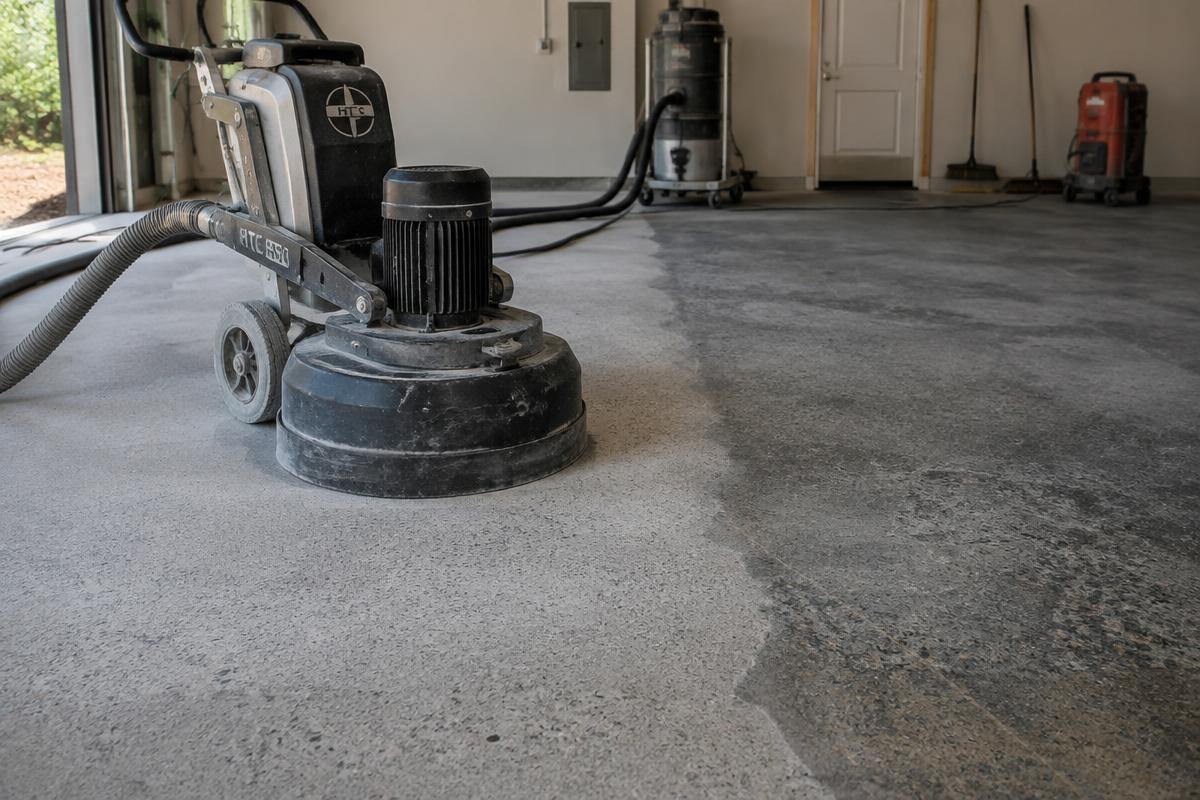
None of it works without preparation. Mechanical grinding to open the concrete profile, patching cracks and spalls, and cleaning thoroughly is what makes a coating bond instead of peel.
Next Steps
Send a short form with your city and garage details — no obligation.
Size, concrete condition, and the look you're after — a few details go a long way.
A local installer follows up to review your floor and options.
Compare systems, colors and pricing before deciding anything.
Beyond the Garage
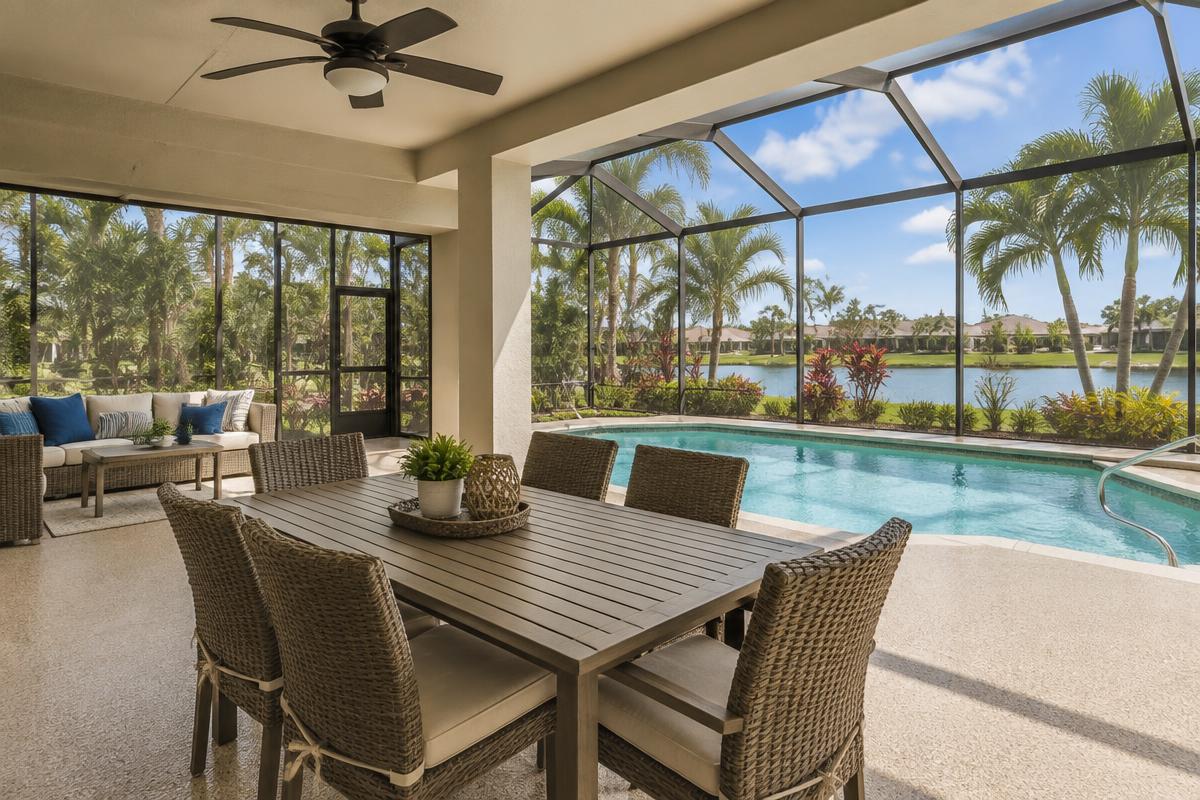
Garage floors are the focus of this site, but local coating professionals can often address other concrete surfaces around the property as well:
Mention the surface on your estimate request and it gets routed accordingly.
Service Area
Quote requests are welcome from homeowners across Polk County. These pages cover three of the county's larger communities in detail.
Polk County, FL
Older ranch garages, newer subdivisions and everything between.
Garage floor coatings in Lakeland →Polk County, FL
Chain of Lakes homes, boat and trailer storage garages.
Garage floor coatings in Winter Haven →Polk County, FL
Fast-growing NE Polk neighborhoods and newer slabs.
Garage floor coatings in Davenport →Also serving Auburndale, Bartow, Haines City, Lake Wales and nearby Polk County communities — include your address in your request and coverage can be confirmed.
Common Questions
Straight answers to what Polk County homeowners ask before coating a garage floor.
There is no single price. Estimates are built around square footage, the condition of your existing concrete, how much grinding and preparation is required, whether cracks or spalling need repair, the coating system you choose, and the finish you want. That is why every quote starts with a few details about your garage rather than a flat rate.
Most residential garages are handled in a short, focused window — preparation and coating steps are typically completed over one to two days, followed by a cure period before vehicles return. The installer who reviews your floor will give you a specific timeline and cure guidance for the system being used.
Epoxy is a thick, well-established resin often used as a base or body coat and it bonds strongly to properly prepared concrete. Polyaspartic coatings cure faster, tend to hold color better under sunlight, and are frequently used as a clear topcoat over decorative flake. Many garage systems use both: an epoxy base with a polyaspartic top.
Often yes. Cracks, small spalled areas, pitting, and old failing coatings are usually addressed as part of preparation with patching compounds and grinding. Concrete with active moisture problems or serious structural movement needs to be evaluated first, because a coating cannot fix a slab issue underneath it.
A smooth, glossy topcoat can be slick when wet. Decorative flake adds texture on its own, and anti-slip additives can be broadcast into the topcoat when you want more grip — a common request for garages that get rain-wet vehicles or for pool decks and lanais.
Coating systems are chosen with the environment in mind. Heat and humidity affect cure times and product selection, and areas exposed to direct sun benefit from topcoats that resist UV yellowing. Proper concrete preparation and moisture evaluation matter more in Florida than almost anywhere else.
Clear the floor completely — vehicles, shelving, bikes, storage totes, and anything mounted low on the walls. Sweep out loose debris and let the installer know about oil stains, previous coatings, or areas that stay damp so the right prep plan is used.
Send a short request with your city, garage size, and the condition of the concrete, and a local coating professional can follow up with options and pricing. The more detail you include about the concrete, the more useful that first conversation is.
Tell us about your garage and get a free estimate from a local concrete coating professional.